This is the second article in EarthShare’s new America’s Farm Crisis series. To stay up to date on our latest releases, you can sign up for our newsletter, and check out our previously published articles here.
How many hands have touched your food?
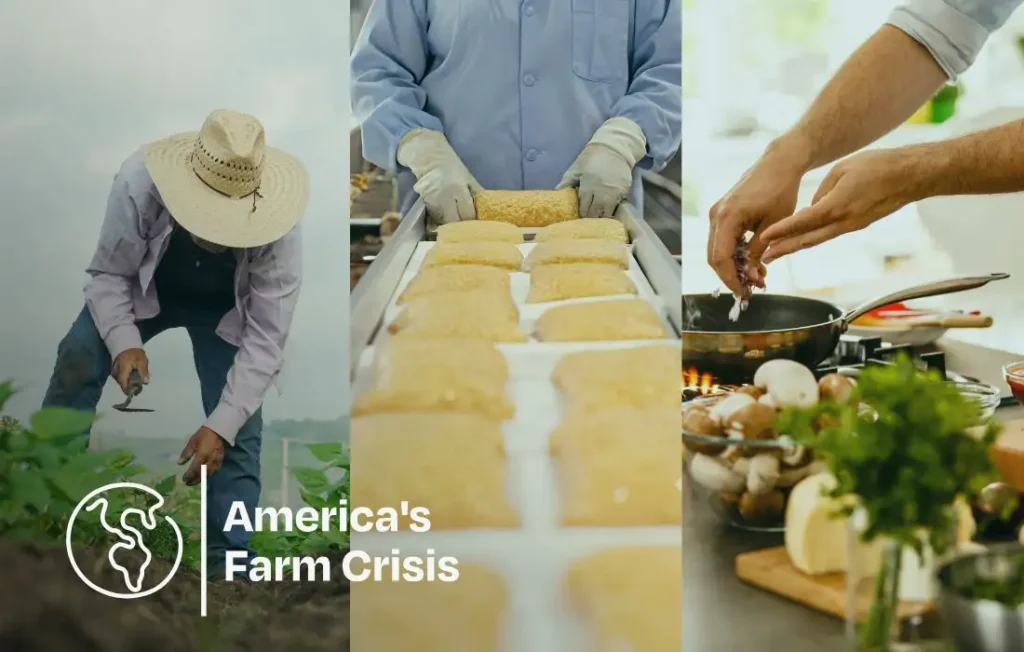
If you put together a basic meal at home, you may think the answer is only one: you. In reality, if you purchased your ingredients from a store, as most of us do, then dozens—possibly hundreds—of people helped get that food onto your plate.
Take your average “house” salad (minus the dressing because, assuming it’s bottled salad dressing, processed foods are another discussion entirely!) made of lettuce, tomato, cucumber, carrots, and black olives. Farmers sowed the seeds for those vegetables, each one likely on a different farm, where farmworkers nurtured and later harvested them. That produce was then transported to a place (or multiple locations) where it was cleaned, sorted, and packaged by manufacturing workers. It was then transported and distributed to the retail store, where the various ingredients were stocked on shelves by workers, and where you eventually purchased them.
Depending on where you live in the United States, the life cycle of our food can be shockingly long, and it involves countless people working tirelessly to ensure we are fed. Sadly, agricultural and food chain workers today face a grim reality; one that sacrifices their health and wellbeing for profit, and that puts food security for all Americans (and, as a result, national security) at risk.
"The heat in the kitchen is horrendous. The grills and griddles get really hot, and the work moves really fast. Even though we have some ventilation, the heat is overwhelming, is tiring, and it lasts all day. Because of the number of food orders we have to take out, there's no time to go to the bathroom, or get a drink of water. When the orders are finished, we try to bring down the temperature of the kitchen, but by the time the temperature starts to drop, we have to turn it up again. The only thing we can do is to hydrate before we get in and use wet towels on our bodies while we work. Workers have fainted and suffered heat strokes. You go to work hoping you don't faint that day."
Ingrid | Laundry Workers Center, NYC
A Lack of Protections for Agricultural Workers
Agriculture and food chain workers are one of the most overlooked groups of frontline workers. Approximately 28 million people work in the U.S. food system; more than any other sector in the country. These workers are essential for ensuring access to food for all Americans, and yet the current lack of protections and rapidly changing state of our climate are making working conditions more dangerous than ever. In many ways, we continue to see the echoes of the struggles of early 20th century workers as portrayed in Upton Sinclair’s The Jungle.
Today’s food systems workers are disproportionately People of Color, women, and immigrants. In fact, 80% of the meatpacking industry and 75% of farmworkers are immigrants. Food systems workers are 68% more likely to live at or below the poverty line, 81% less likely to have healthcare, and 93% more likely to be food insecure.
“Every day, poultry workers are subjected to inhumane working conditions that jeopardize their health, safety, and dignity. Behind the food on our tables are workers forced to endure dangerously fast line speeds, toxic chemical exposure, freezing temperatures, and even denial of basic needs like bathroom breaks. These conditions cause lasting injuries, chronic illnesses, and deep psychological harm. No one should have to sacrifice their wellbeing for our food. It’s time to hold the poultry industry accountable and demand safe, humane, and just workplaces.”
Magaly Licolli, Executive Director of Venceremos
Year after year, worsening conditions, such as the elevated risk of heat-related illnesses in frontline workers, are reported by organizations like the Food Chain Workers Alliance. Yet, protections for farm workers and other frontline food chain positions are not represented in the recurring Farm Bill and have been excluded from federal labor standards since the 1930s. Currently, there are no federal heat protections for workers in the U.S. or Canada.
"[The greenhouse] is closed, and there is no air circulation. There are fans, but they only blow hot air instead of cooling the environment, which makes it stifling… The heat gives me very severe headaches that become unbearable, and I have to take painkillers. It makes me feel sad, anxious, causes nausea, vomiting, excessive sweating, and dizziness. I didn’t feel such severe headaches until a few years ago, but when it gets really hot, the headaches become stronger and last all day."
Anonymous | Justice for Migrant Workers, Ontario, Canada
This frequently leads to exploitation, such as extra fast and dangerous line speeds in meat packing plants, heightened risk of injury due to dangerous machinery, extremely long working hours, and even harmful legislation—like the one passed in Florida in 2024—which prevents local governments from regulating and requiring sufficient water and rest breaks. Many frontline agriculture workers are paid by piece rate, not by the hour, which discourages taking breaks despite possibly dangerous working conditions.
Often, undocumented workers are directly targeted by this exploitation as 44% of food chain workers don’t have authorization to work in the United States—that’s nearly half of the workforce. The undocumented nature of their immigration status is used against them, forcing them to work through dangerous and/or hazardous conditions and making them more susceptible to natural disasters.
Help from the Ground
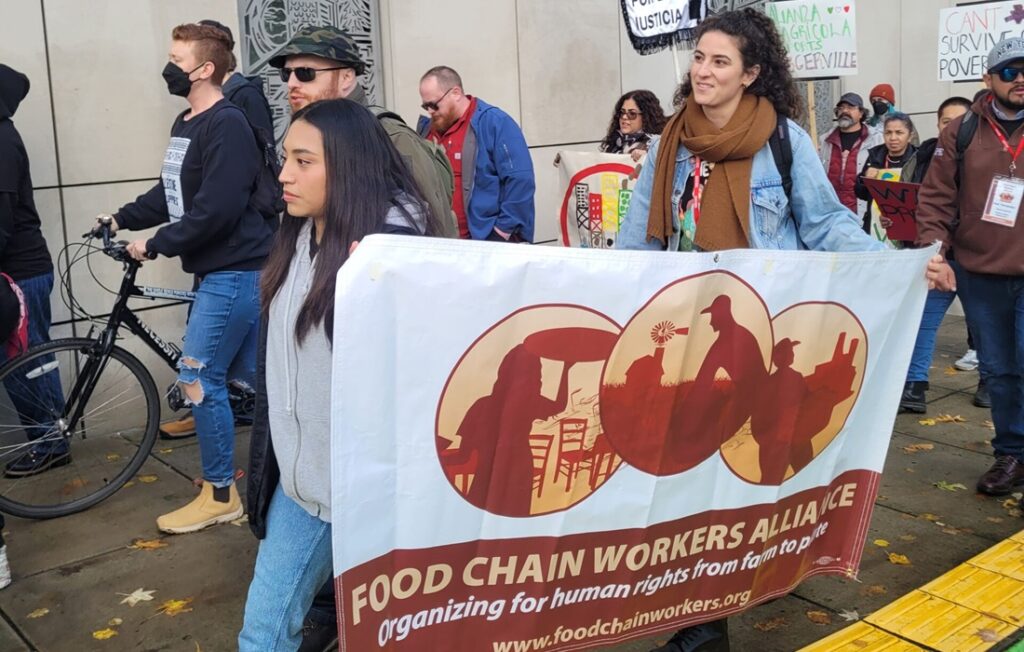
Food Chain Workers Alliance (FCWA) is a collective of member organizations representing employees from across the food chain—farmworkers, factory and warehouse workers, and those employed at supermarkets, restaurants, and cafeterias; even street vendors. FCWA helps educate workers on their rights, unites diverse communities in the fight against labor exploitation and unfair practices, and recognizes the importance of climate justice for all workers in the food system.
Their member groups are on the ground across North America, working to address critical injustice issues for farmworkers, particularly surrounding the growing heat crisis.
- The Farmworker Association of Florida trains workers on the signs and impacts of heat stress, and how to protect and advocate for themselves and one another while on the job. For six years, they’ve been working to pass legislation that mandates shade, water, and breaks for all farmworkers in Florida.
- Brandworkers supported the successful union campaign of bakery workers at She Wolf Bakery in New York City. One of the key issues raised by the workers was extreme temperatures—both hot and cold—in the workplace.
- Warehouse Worker Resource Center engaged in a decade-long fight for indoor heat protections in the state of California. Their work included marches, legal battles, and documenting warehouse temperatures throughout the state. After more than 10 years of dedication, their work paid off, and rules went into effect in 2024.
- Familias Unidas por la Justicia petitioned the Washington State Department of Labor & Industries to increase protections for outdoor workers, particularly regarding heat. The group held rallies and participated in meetings with regulators until 2023 when the Department officially adopted permanent rules requiring employers to provide water, shade, breaks, and other accommodations for farmworkers when temps reach 80°F and above.
- Justice for Migrant Workers has been hosting egg-frying demonstrations on the pavement outside the Ontario Department of Labour (Ontario, Canada) each summer, recently delivering a new demand letter to the Minister of Labour for the improvement of farmworker protections.
- FCWA members recently came together to submit a comment to the Occupational Safety and Health Administration (OSHA) during their review of new heat standards, which were proposed in 2024. Though they have acknowledged the importance of increased heat protections, OSHA has not yet officially instituted these new rules.
Grassroots organizing has become an integral part of ensuring protections for farmworkers at local and state levels. This work wouldn’t be possible without the diligent work of FCWA, their member groups, and all others advocating for and advancing food workers’ rights in America and beyond.
How Climate Impacts Agricultural Workers
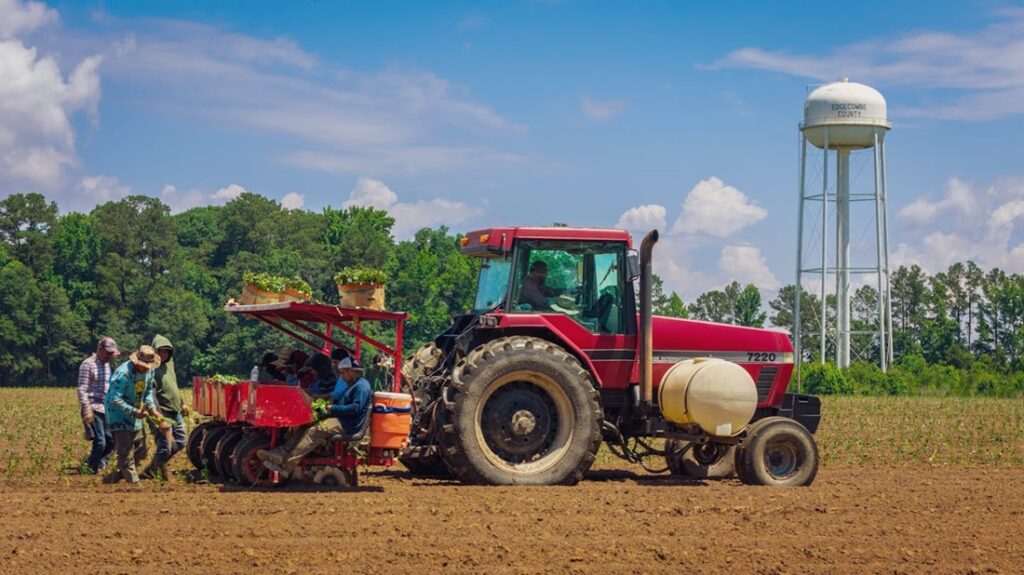
We’ve already touched on the side effects of our warming climate—extreme heat being a major one—and it’s only getting worse. Intense, prolonged heatwaves are taking place all over the world, including in states across the U.S., and this is leading to an increase in workplace injuries with an estimated 20,000 heat-related injuries per year, both indoors and outdoors. Farmworkers in particular are dying from heat-related, on-the-job illnesses 35 times more than any other occupation in the country.
"In packaging companies, there's no ventilation; instead of a cement or wood roof, it's made of tin, and that makes it even hotter. Employers could give workers water or Gatorade, or give them ten or fifteen minutes every hour to get some fresh air, or reduce the speed of the machines, but they don't. The office managers don't notice it because they're comfortable with air conditioning."
Anonymous | Warehouse Workers for Justice, Illinois
Other forms of extreme weather are also impacting worker health and wellness. Lung damage and an increased risk of heart attack, stroke, and cancer have all been linked to wildfire smoke inhalation, which exposes workers to dangerous toxins and microparticles.
Climate disasters also affect frontline food and agricultural workers at a disproportionate rate when it comes to finances and stability. The vast majority of workers live paycheck to paycheck and can’t afford to stop working, so when a crop is destroyed due to severe weather, drought, or wildfire, the workers have no way of generating income. Many workers are also tied directly to the land they work on, living in housing provided by the landowner. If this housing is damaged along with the crop, they have nowhere to go.
Most notably, climate change is putting a significant burden on farmers, ranchers, and other food producers to adapt to the “new normal.” Unfortunately, many farms and corporations are taking labor shortcuts to avoid the associated costs (such as putting up pavilions for shade and providing water and electrolytes to workers) and are willing to put people in harm’s way because it is cheaper and easier than addressing their own work practices and there are no enforcement mechanisms in place to protect vulnerable workers OR support the adoption of safer, more sustainable practices.
Damaging Feedback Loops
The climate problems impacting agricultural workers aren’t limited to workers alone. They’re putting whole ecosystems, and thus our entire food system, at risk, and the widely adopted “solutions” of today are only making these problems worse. As a result, we continue to perpetrate damaging feedback loops with progressively more harmful outcomes.
Let’s take monocropping, for example.
On the surface, the concept alone may seem rather innocent:
- A farmer specializes in one crop
- It’s easier to manage because the conditions across their fields are relatively the same
- Planting, fertilizing, and harvesting all require the same materials and techniques
- The farmer can sell the harvest in bulk to select buyers
(Corn, soy, and wheat are some of the most common crops grown in this manner.)
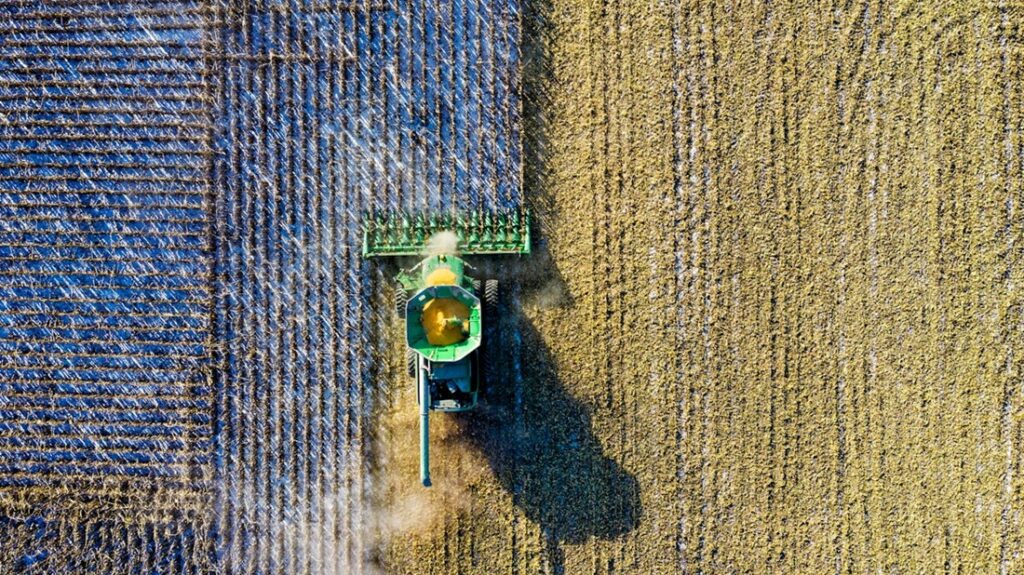
However, we know that monocropping is a highly damaging practice when it comes to soil health. Planting the same crop over and over again on the same lands depletes nitrogen in the soil, making the plants harder to grow, less healthy, and more susceptible to pest infestations. Thus, farmers are forced to pump out more fertilizers and pesticides to protect their crop, worsening the health of the soil and the farmworkers who are exposed to these toxic chemicals in high quantities.
The more damaged the soil health by monocropping and fertilizer and pesticide usage, the more the farmer depends on fertilizers and pesticides to protect each individual crop, which increases overall expenses for the farmer and depletes the nutritional value of the crops themselves. Not to mention the leaching of these harmful chemicals into groundwater and the increasing effects of climate change making conditions worse on all fronts. And so on, and so on.
Everyone is hurt by this cycle—
- The farmer, because it becomes harder and more expensive to grow crops.
- The farmworker, because of increased exposure to toxic chemicals and severe working conditions (e.g., heat).
- The end consumer, because crops no longer have the same amount of nutrition and expose people to harmful toxins.
- The world, because unhealthy soil traps and stores significantly less carbon from our atmosphere, lending to the worsening effects of global warming.
What Solutions Are Available?
To create the kind of sector-wide change we need to protect Americans and ensure a healthy, sustainable food system now and into the future, we must:
#1. Improve labor protections for agricultural and food chain workers
Yes, that includes restaurant workers and other food producers. We need to set clear-cut, transparent roles and responsibilities for enforcement and oversight. We also need to encourage Congress to include provisions for agricultural labor in the next Farm Bill (the “current” version having expired on September 30, 2025).
#2. Invest in community climate resilience and sustainability
It better enables local communities to meet the exact needs of their citizens with greater flexibility. Emergency preparedness and natural disaster mitigation (such as controlled burns to create wildfire buffers) will also play a role.
#3. Support organizations and projects already prioritizing just and sustainable labor practices
This should include the fair and safe treatment of agricultural and food chain workers as well as environmental protections and adaptation strategies. These groups already exist, and work is actively being done across the United States to increase protections within our food systems and enshrine protections for those same systems as a result.
The Pivotal Role of Environmental Philanthropy
When we talk about the harms food and agricultural workers face, supporting ecosystem, climate, and conservation work may not be the first solution that comes to mind. Yet, it’s these solutions that will eliminate the incentives that put workers in harm’s way.
By investing in just transition funds, worker-led organizations, sustainable farming, and ecosystem rehabilitation, we can standardize regenerative farming practices that are healthier for the environment, for workers, and for consumers—all while meeting national food demand.
Let’s continue with the earlier example of soil health. By replacing monocropping with regenerative practices such as cover crops, crop rotation, and limiting mechanical soil disturbance (no-till), we can improve the overall soil quality on our agricultural lands. This has multiple benefits:
- By preserving the natural biological structure of the soil (the soil’s own underground ecosystem—including beneficial insects), we improve plant resistance to pests, and fewer synthetic chemicals are needed.
- Healthier soil can absorb and store significantly more carbon dioxide.
- Healthier soil is better at retaining water (lowering overall irrigation costs).
- Soil health increases the overall nutritional value of the crops grown and provides stability for planting year after year.
The result? Worker and consumer exposure to harmful chemicals goes down dramatically, and food security increases due to healthier crop yields, meaning job security is more dependable. Healthier workers, both physically and mentally, are more efficient.
This is only a surface-level example, and yet, you can see how quickly the benefits compound. When we protect and invest in the environment, we also protect our agriculture and food workers.
What You Can Do to Help
Ready to help? Support groups and organizations in your community and across the country who are helping to establish, protect, and advocate for our food and agriculture workers.
Here are a few we highly recommend:
- Rural Community Workers Alliance (RCWA) is educating and empowering refugee and immigrant food workers to address workplace concerns.
- Venceremos fights for the human rights of workers throughout the poultry supply chain.
- Food Chain Workers Alliance (FCWA) organizes food systems workers locally and globally to improve wages, working conditions, and communities.
- HEAL Food Alliance is transforming food and farm systems to better care for our lands, workers, communities, and local economies.
- American Farmland Trust helps farmers improve infrastructure, transition to organic, install renewable energy sources, and build climate resilience.
- Tilth Alliance provides peer-to-peer education, resources, and funding for farmers on sustainable, organic, and regenerative farming practices.
In order to achieve food security in America—both now and in the immediate and distant futures—we must prioritize the health and safety of our agriculture and food workers. By prioritizing environmental and agricultural sustainability, addressing negative feedback loops, and investing in climate resilience, we can reduce harm, increase productivity, and build a food system infrastructure that benefits communities and the planet—making it sustainable for years and years to come.
Learn More
- Read more about sustainable agriculture with EarthShare’s 30×30 Project.
- Take a deeper dive into the core principles of regenerative agriculture.
- Test your knowledge on the state of food insecurity in America with a quiz.
- Explore the state of food chain workers in 2025.
- Uncover how grassroots food justice solutions can reclaim the supply chain for healthier communities.