The Life of Jane Goodall: Building a Legacy of Good
How one woman’s passion led to redefining a species and reimagining how humans relate to the world around us.
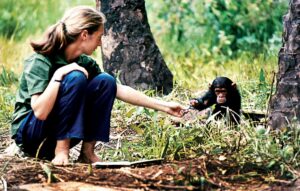
Dr. Valerie Jane Morris-Goodall (Jane Goodall), famed for her illuminating research with chimpanzees and being an outspoken leader in environmental conservation, didn’t begin her career as an environmentalist. In fact, she did not have any kind of formal university experience whatsoever when she started studying wildlife—chimpanzees, in particular—at the age of 23 in present-day Tanzania in the 1950s and 1960s. Instead, she had something greater; something that steered her entire career and shifted how we, as humans, relate to the natural world around us: passion, and immense determination.
The professor Goodall worked with at Gombe Stream Game Reserve (since renamed to Gombe Stream National Park), Dr. Louis Seymour Bazett Leakey, actually thought Jane’s lack of academic experience was immensely beneficial, as she would be less likely to be biased by academic processes or ways of thinking.
Goodall’s love for animals and a dream of one day observing wildlife up-close in Africa is what led to her first experiences as a wildlife researcher, and it was in the process of this work that humanity’s toll on the environment began to play a more significant role in her research.
“Chimpanzees ... have been living for hundreds of thousands of years in their forest ... never overpopulating, never destroying the forest. I would say that they have been in a way more successful than us as far as being in harmony with the environment.”
This shift didn’t occur because, suddenly, Jane decided to change her focus of study to ecology or sustainability; she didn’t discover out-of-the-blue that she liked this work better. Rather, in the process of pursuing the thing she loved (wildlife and animal behavior), she discovered that caring about the environment was an inevitability. Chimps, just like most living things, are irrevocably connected to their environment, and changes to it directly impact the balance and wellbeing of whole ecosystems and species.
An Emphasis on Including the Youth
Jane Goodall was certainly a pioneer in her field of research—after all, it’s thanks to her work that we know chimpanzees are omnivores and make their own tools; previously a trait only assigned to humans—but she also was a veracious advocate for animal welfare, protecting our planet, and educating and involving young people in conversations about conservation. Though not as talked about as her research with chimpanzees, the impact of this work cannot be ignored.
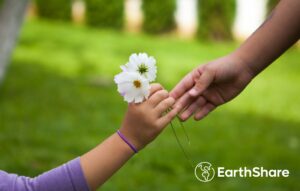
Goodall inspired generations of young people to follow their passions, pursue curiosity, have empathy for animals and the natural world, and speak out against harmful practices destroying the environment and many natural processes humans and wildlife rely on for survival.
“Young people, when informed and empowered, when they realize that what they do truly makes a difference, can indeed change the world. They are changing it already.”
In 1977, Jane founded the Jane Goodall Institute for Wildlife Research, Education and Conservation. In 1989, her picture book for kids, The Chimpanzee Family Book, won the UNICEF/UNESCO Children’s Book of the Year Award. Then, in 1991, she created a youth program called Roots & Shoots, which “empower[s] young people to affect positive change in their communities.”
In a global conversation that is very much about the future of our planet, Jane Goodall believed in educating, including, and amplifying the voices of those who would be inheriting it—an important lesson for us all (environmentalist or not) to take with us.
Following Jane's Lead
“The greatest danger to our future is apathy.”
Jane’s successes and accomplishments stemmed from her determination to pursue the thing she loved, and, in doing so, she helped shape the way we talk about animal behavior, our role in our own ecosystems, and conservation at large. We all have the ability to do the same.
Jane Goodall was a scientist at 23, a professor at 36, a published novelist at 37, a nonprofit founder at 46, and a speaker and educator until the day she died at 91. While how she pursued her passion changed shape and evolved over the course of her life, she never stopped doing it.
If we’re going to protect the environment for ourselves and all future generations, we need to follow Jane’s lead: pursue what we love, share the knowledge we learn, and do so with compassion, empathy, grit, and zeal.
Lasting environmental change happens when we join forces. EarthShare Nonprofit Partners are there on the front lines . . . And your support keeps that work going strong.